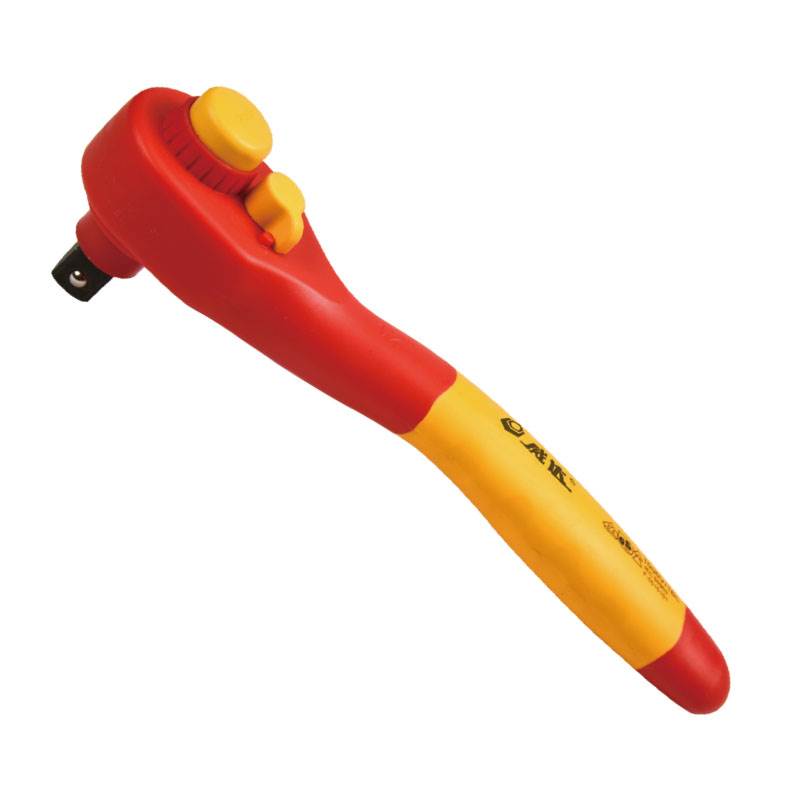
Product Overview
Key Selling Points
1. High Voltage Resistant, Ensuring Electrical Work Safety
2. High Temperature Resistant, Stable & Reliable in Hot Environments
3. Corrosion Resistant, Long-Lasting in Harsh Environments
4. Precision Ratchet Mechanism, Fast & Efficient
5. 12.5mm (1/2″) Universal Drive Size
6. Ergonomic Design, Comfortable Operation
Product Specifications
Applications
Why Choose WD&WL
1. Direct Manufacturer, Professional Production
2. Three Protections, Safety Without Worry
3. Precision Ratchet, Efficient Operation
4. Ergonomic Design, Comfortable & Durable
5. OEM/ODM Customization
6. Fast Delivery, Ample Stock
FAQ
Q1: What is the difference between an insulated ratchet wrench and a regular ratchet wrench?
A: The main difference is insulation performance. Insulated ratchet wrenches undergo specialized insulation treatment and high-voltage testing, effectively preventing electric shock in energized work environments. Ordinary ratchet wrenches have no insulation layer and pose electric shock risks in electrical environments. Additionally, insulated ratchet wrenches typically offer added features like high temperature and corrosion resistance, adapting to more harsh working environments.
Q2: What does the specification 12.5mm (1/2″) mean?
A: 12.5mm (approximately 1/2 inch) refers to the ratchet wrench’s drive square head size — the size of the square head that connects to sockets. The 1/2″ drive is the most commonly used size in industrial maintenance, compatible with the vast majority of common socket sizes (typically corresponding to M10 to M30 bolts). When choosing a ratchet wrench, confirm that it matches the drive size of your sockets.
Q3: Can this insulated ratchet wrench be used with regular sockets?
A: Mechanically, the 12.5mm drive square head fits standard sockets of the same size. However, from a safety perspective, when used in energized work environments, we strongly recommend using insulated sockets as well to ensure a complete insulation protection chain. For ordinary non-energized maintenance work, pairing with standard sockets is perfectly fine.
Q4: What are the ratings for high temperature resistance, high voltage resistance, and corrosion resistance?
A: High temperature resistance: The insulation material does not soften, deform, or lose insulation properties at high temperatures, suitable for the normal heat range of industrial equipment. High voltage resistance: Rigorous high-voltage testing ensures insulation layer integrity and prevents electric shock. Corrosion resistance: Long-term use in moisture, salt spray, and acidic/alkaline environments without rusting or aging. Specific technical parameters and detailed test reports are available upon request.
Q5: Why should you choose an insulated ratchet wrench?
A: If your work involves electrical equipment maintenance, power operations, or working in environments with electric shock risk, an insulated ratchet wrench is an essential safety tool. Even if your work environment is normally de-energized, unexpected situations can occur (such as equipment leakage or misoperation), and insulated tools provide an extra layer of safety protection. Professional electricians and maintenance personnel choose insulated tools as a responsible approach to personal safety.
Q6: Is the ratchet mechanism prone to breaking?
A: Our insulated ratchet wrench uses a precision-machined ratchet mechanism with heat-treated and precision-ground teeth that fit tightly and are wear-resistant. Under normal use, the ratchet mechanism can withstand tens of thousands of cycles without failure. Compared to the stamped teeth in cheap products, the precision-machined ratchet mechanism lasts longer and is more reliable. However, please do not use it beyond its rated torque range.
Q7: What is the maximum torque of this wrench?
A: The 12.5mm (1/2″) ratchet wrench typically has a rated torque of 200-300 Nm, sufficient for the vast majority of industrial maintenance needs. Specific rated torque values can be found in the product specification sheet or by contacting us for detailed technical parameters. For higher torque applications, we recommend using larger size ratchet wrenches or torque wrenches.
Q8: Can an insulated wrench be used with a cheater pipe (extension tube) for extra leverage?
A: Using a cheater bar to extend the wrench handle is not recommended. Doing so may exceed the wrench’s rated torque range, leading to damage to the ratchet mechanism or insulation layer, and will also compromise the integrity of the insulation protection. If greater torque is needed, use a larger size wrench or a dedicated torque tool.
Q9: How to maintain an insulated ratchet wrench?
A: After use, wipe clean any oil and dust from the surface. Avoid using organic solvents (such as acetone or alcohol) to clean the insulation layer. The ratchet mechanism can be periodically lubricated with a small amount of oil to maintain smooth operation. Store in a dry, cool place, away from direct sunlight and high temperatures. Regularly inspect the insulation layer for cracks or damage — replace promptly if abnormalities are found. Never use for operations exceeding rated voltage and torque.
Q10: Can the wrench still be used if the insulation layer is damaged?
A: Absolutely not. Once the insulation layer shows cracks, damage, peeling, or becomes brittle from aging, its insulation protection performance declines or even fails. Continued use poses electric shock risks that seriously threaten personal safety. If any damage to the insulation layer is found, stop using it immediately and replace with a new insulated tool. Safety always comes first.